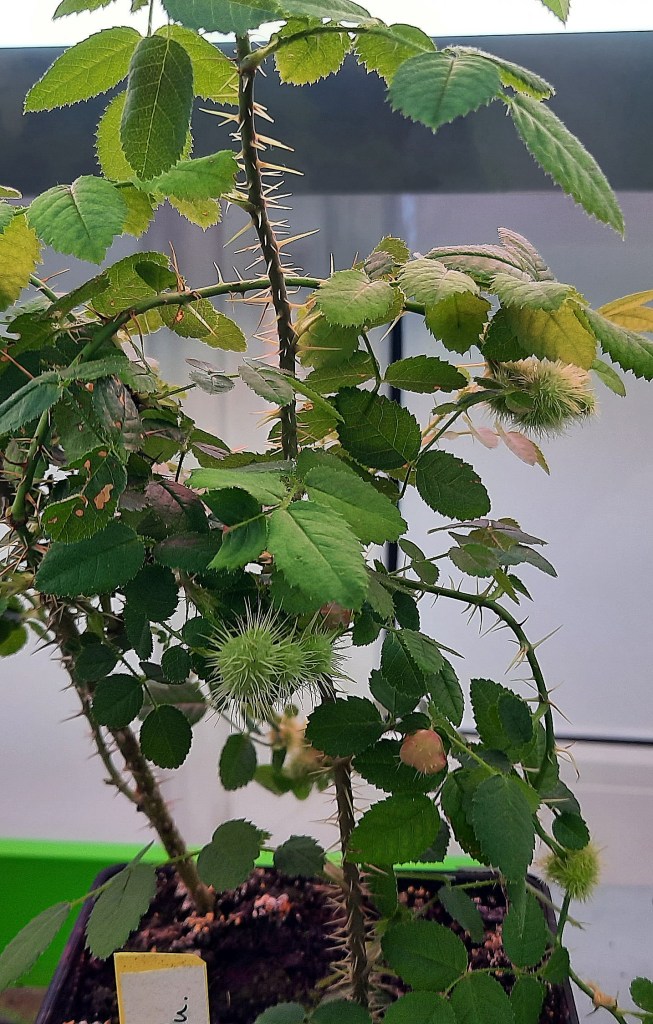
Successfully achieving gall formation by Diplolepis rosae and Diplolepis mayri on Rosa rubiginosa under laboratory conditions represents a significant achievement in plant gall research. We have managed to replicate the intricate interactions between these gall-forming wasps and their wild rose host in a controlled environment.
This achievement demonstrates a deep understanding of the complex ecological and physiological factors that govern gall formation in gall-forming insects and their host plants.
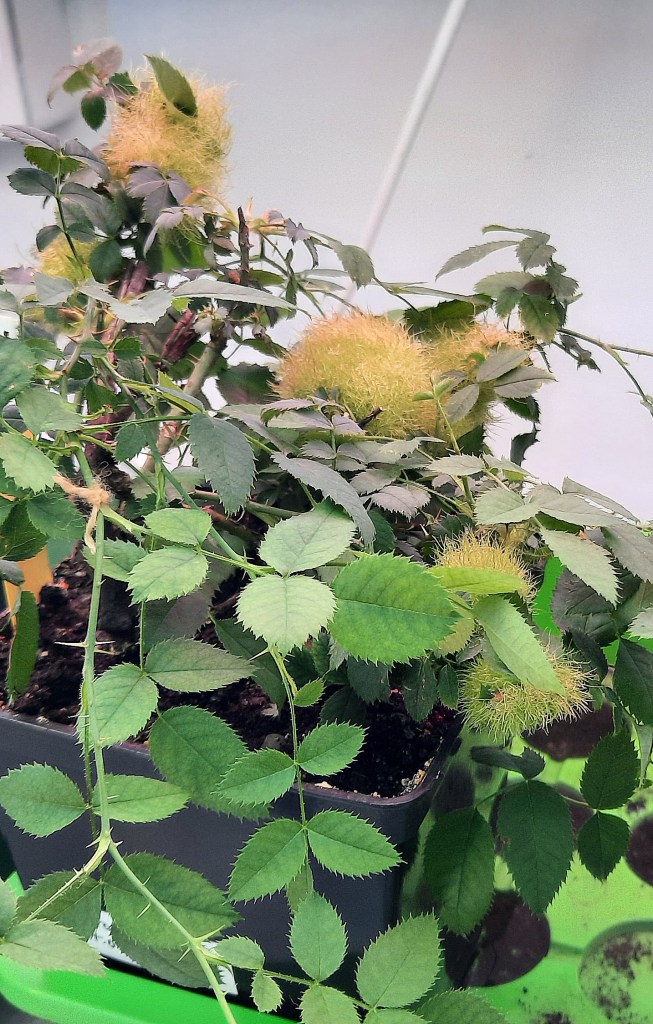
The successful induction of galls on Rosa rubiginosa opens up new avenues for studying the mechanisms underlying gall formation and the physiological responses of both the plant and the gall-inducing insects. This research not only contributes to our understanding of plant-insect interactions but also provides insights into the potential applications of gall-inducing insects in ecological studies and biological control strategies.
Furthermore, the ability to induce gall formation these results offers opportunities for controlled experimentation and manipulation of gall development, facilitating research into the ecological consequences of gall formation and the evolutionary dynamics of plant-insect interactions.
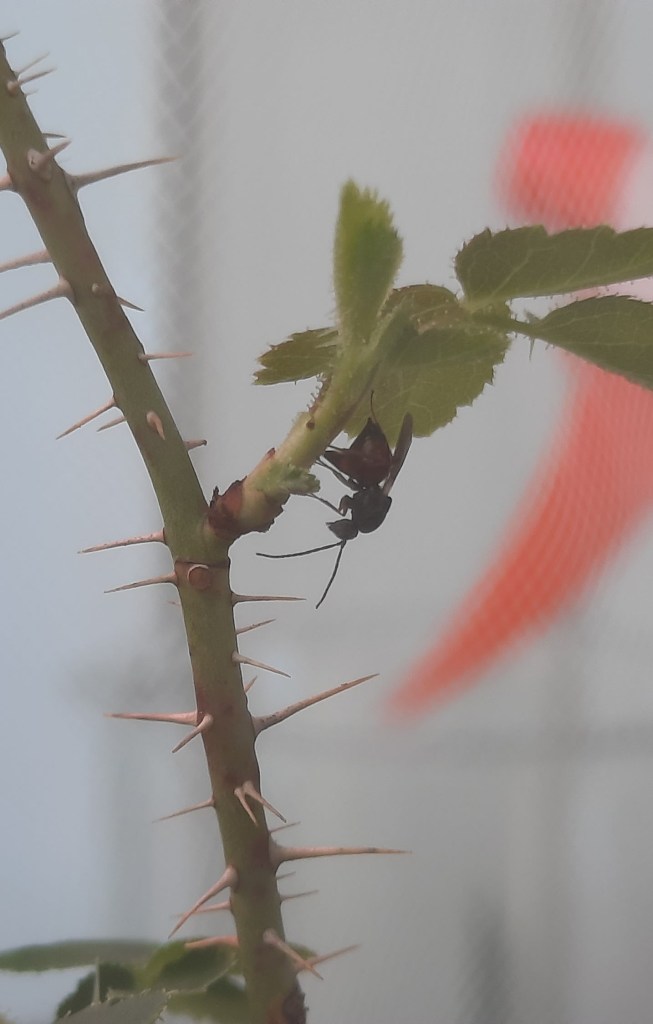
Successfully observing oviposition by Diplolepis rosae and D. mayri under laboratory conditions is a significant accomplishment in entomological research. Through meticulous experimentation and precise environmental control, we created conditions that mimic the natural stimuli and cues that trigger oviposition behavior in these gall-forming wasps.
The successful observation of oviposition by Diplolepis rosae and Diplolepis mayri in the laboratory opens up new avenues for studying the reproductive biology and behavior of these insects. Researchers can now observe and analyze the oviposition process in detail, including the timing, frequency, and location of egg deposition on the host plant.
 RoseFarmLab